Why I built Sanarise on Odoo
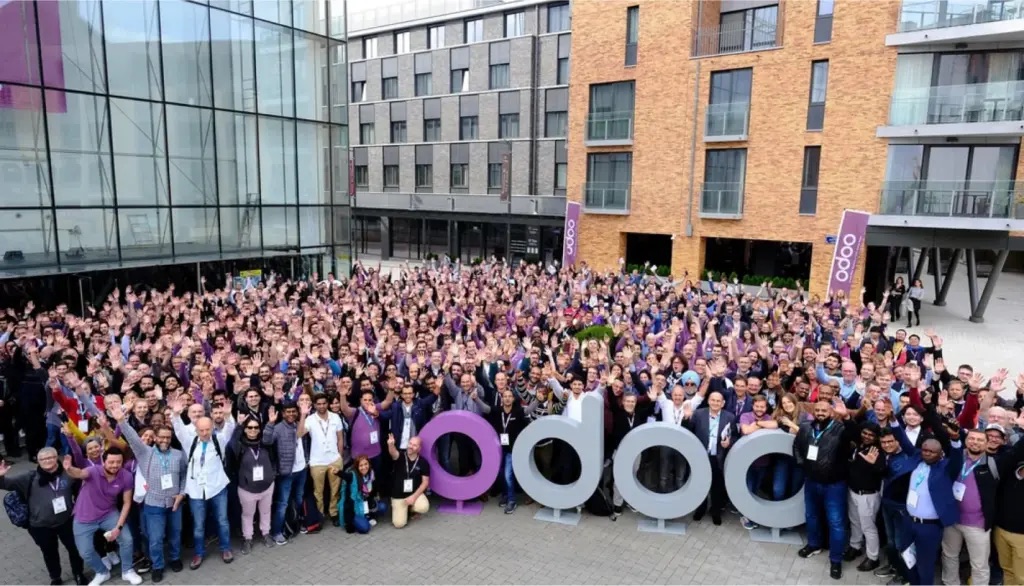
Sanarise has been an Odoo partner since 2020. The partnership began with our first company in Istanbul, and the work is run today from our headquarters in Muscat. We sell Odoo, implement it, and support it; that is our core business, and it is the largest revenue stream in the Sanarise network.
This essay is about why: why we decided to sell one product and focus on it, and why this product in particular.
The product decision: why specialise in one system?
We could have offered ten different systems and left the choice to the client, but we chose a different path: adopting one system and mastering it completely.
We built that decision, and our choice of Odoo in particular, on three principles:
- Depth over breadth. The partner who sells every system knows them superficially, while the client is investing money in an expert partner who understands the system's finest details and hidden corners.
- Technical differences are fading. ERP systems have come to resemble one another closely in their core functions, and the gap between them narrows year after year.
- Investing in the company's vision. The real difference is no longer in the system itself but in the company that develops it and its vision for the future. Today's product is the fruit of decisions taken years ago, and tomorrow's is set by decisions being taken now.
So my most important question was not about the current system's features but about the company behind it: does it have enough agility to evolve and adapt fast? And will it endure, and keep its lead and its stability, fifteen years from now?
The software mirrors the org chart
Odoo covers every need a company has: accounting, sales, inventory, manufacturing, HR, and even running the website. Despite that breadth, the system has kept its leanness and its freedom from complexity by deliberate decision; the entire product is written in around 400,000 lines of code, a size that reflects rare engineering efficiency for a system that delivers all of these functions.
That achievement is organisational before it is technical: a company with a flat structure produces software that matches it in fluency. The strength of that structure comes down to the following:
- High focus. The whole company adopts one clear philosophy: one product, one way of delivering the service, and only three main departments.
- Quality over quantity. Its edge over giant organisations is the right people: a few genius engineers rather than an army of ten thousand developers.
- Transparency (open code). Most of the software's code is open source, which lets a partner read the system and understand it precisely, and identify the causes of failures the moment they occur and fix them. Unlike closed vendors, where you sell a black box and can only wait for an answer about it.
The company from the inside: the power of refusal
The secret of Odoo's leanness lies in a series of deliberate refusals that Odoo's founder and CEO Fabien Pinckaers applies to protect the company from managerial complexity, and describes openly without reservation. The philosophy comes down to a few rules:
- Promotion from inside only. No managers are hired from outside, even when opening a company in a new country. A team leader has to be the most skilled in the team; teams are small, around ten people, and hold no recurring meetings, because the aim is to work together, not to manage people. Pinckaers: "The only objective I have on a team leader: make your team become better."
- No restrictive budgets. The decision is left to the employee's judgement. "If you give budget to people, they will just spend the budget." He tells of a salesperson asking whether he could buy a fifty-dollar barcode scanner for a demo, and his answer: "You're smart, you know if it's worth it or not, decide." Approving a fifty-dollar purchase request would cost the company more than fifty dollars of time, so the employee is trusted and learns responsibility.
- Skill over the résumé. Hiring is based on an immediate trial: the developer codes, the salesperson gives a demo, then the decision is made in a single meeting and the job offer arrives within days. They look for excellence in one skill rather than an average level in everything, "because if you look for people that are perfect in everything, you will get people that are average on everything", to the point that employees choose their own job titles.
- Leading from the field. Pinckaers spends half his time in the product with the developers, and the other half travelling to run struggling subsidiaries and bring them back to growth himself: three years in the United States, then a full year in India, after which the subsidiary was four times its size with the same managers. His view of his peers is blunt: "The company needs them more than the external people do."
- Long-term ownership. The company is not for sale and will never list, and that was agreed with the investors from the start. That stability gives it the freedom to take hard decisions, such as rebuilding parts of the system to move it forward, without pressure from investors looking for a quick return. "Public companies tend to refocus on the short term, and our success has always been to build for the long term."
Under all of it sits one principle that Pinckaers sums up in a sentence: "There is a dark force in every company that pushes it toward complexity, and you always have to fight back against it." Odoo's structure is the living embodiment of that resistance.
The large vendors against the speed test
The secret lies in organisational burden. SAP and Oracle have far more money and talent than Odoo, but their planning cycle has become longer than the market's product cycle, and every layer that gives them stability makes change more expensive. The company that needs a committee, a budget, and three years to add a feature loses to the company that adds it in one release.
AI sharpens that test. What it does is shorten product cycles and reward whoever can rewrite cheaply; agility then becomes the most important asset, and size becomes a burden. I always start from the problem before the tool: half of what is marketed today under the name of AI can be solved by good engineering design at lower cost. Where it is real, such as reading invoices so the accountant reviews instead of typing, it changes the job from the ground up. SAP will be around for many years, but it enters this phase weighed down by an enormous structural burden.
Their partner networks are built in the same shape. An SAP partner sells a project that takes two years and costs millions; that is the model it lives on, and it is the same model that is being turned into a cheap commodity. Had I built Sanarise there, I would be facing today a market shrinking around me.
This is a slow shift, measured in a decade or two. It shows most clearly at forced migrations: every time a large vendor forces its customers onto a new platform, some of them start looking for alternatives, and many of those who looked ended up with us. Whoever sells the faster company's product wins with it.
The next fifteen years
My confidence in Odoo for the next fifteen years is higher than it was when we started, and the reason is the same AI that worries many people in this market. AI lowers the cost of writing code, and when the cost of writing falls, the whole difference shifts to the speed of decision and the size of what has to be rewritten. A company whose product is 400,000 lines, whose decisions are made inside small teams that wait for no committee and no budget, and which is under no quarterly pressure, is the company designed for exactly this phase. Whoever carries tens of millions of lines and layers of managers will need years to reach what Odoo reaches in one release.